


Mike Johnson will not run for House minority leader. The Speaker of the House told his staff on Wednesday morning, November 4, 2026, that he will give up the Republican leadership after his party lost control of the House in Tuesday’s midterm elections, setting off an immediate battle to succeed him. Mike Johnson’s decision, announced on a staff call and confirmed by multiple outlets, closes a turbulent three-year run at the top of the House and opens one of the most consequential leadership fights in recent Republican history.
According to Reuters, Mike Johnson announced his decision to staff on Wednesday morning, following the loss of his Republican majority in this week’s midterm elections. USA Today reported that two sources familiar with the announcement confirmed Johnson told staff he would not run for minority leader after Republicans lost control of Congress. The New York Post reported that multiple sources on Johnson’s team said he told staff Wednesday he will not vie to be minority leader in the next session of Congress.
The announcement was striking because, until the votes were counted, Mike Johnson had said the opposite. CBS News, via News9, reported that Johnson recently told the network he intended to remain as the party’s leader if Republicans lost control of the House. Instead, after a defeat his party experienced as a rout, he chose to step aside within hours of the result becoming clear.
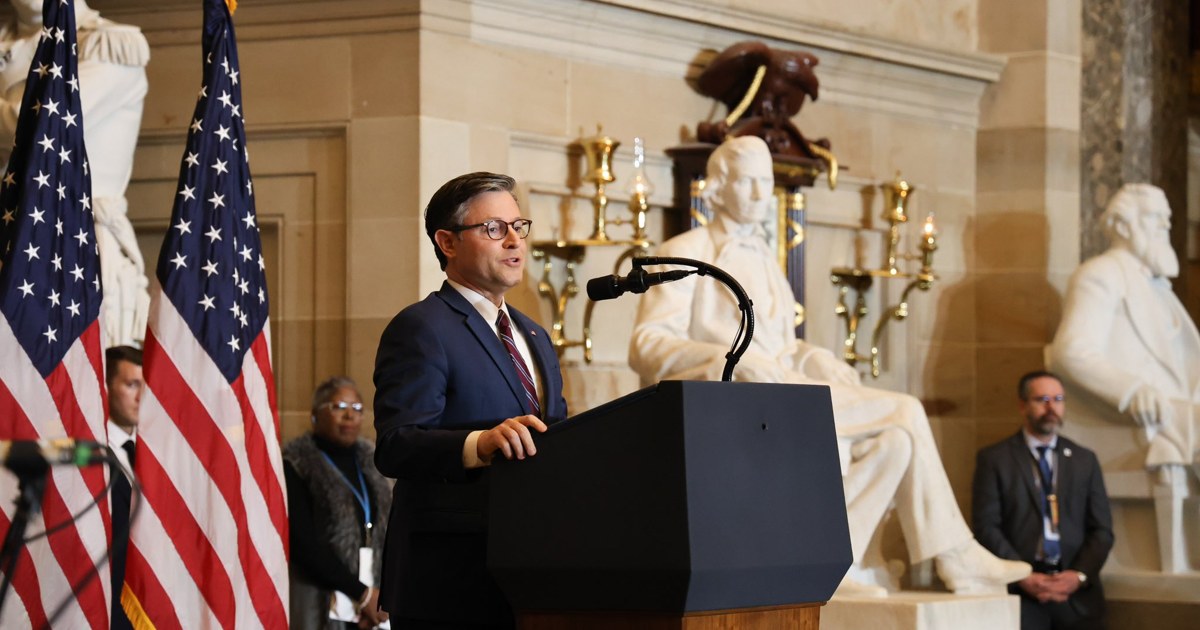
Mike Johnson Steps Aside After the Midterm Defeat
Mike Johnson’s rise to the speakership was itself a product of Republican turmoil. He became Speaker in October 2023 after Kevin McCarthy was removed from the position, emerging from relative obscurity to lead a party that had cycled through candidates in a chaotic, weeks-long contest. From the start, he governed one of the slimmest majorities in the lower chamber’s history — a 218-214 Republican edge that Reuters noted he struggled to maintain control of for three years.
That narrow majority defined his speakership. With almost no votes to spare, Mike Johnson had to hold together a conference that ranged from pragmatic moderates in swing districts to hard-line conservatives who were willing to defy their own leadership. Every major bill became a negotiation, every absence a crisis, and every internal rebellion a public spectacle. His allies credit him with keeping the conference functioning at all; his critics say the party’s midterm collapse is the verdict on that record.
During the 2026 campaign, Mike Johnson spent much of his time insisting that Republicans would not merely hold the House but expand their majority. Reuters reported that the Louisiana Republican spent the campaign arguing Republicans would grow their numbers, only to see Democrats take control of both the House and the Senate on Tuesday in a sweeping repudiation of Republican leadership under President Donald Trump. The scale of the defeat — Democrats flipped dozens of seats from California to New Jersey, including three in Iowa alone, according to USA Today — left little room for Johnson to argue that he should stay on as leader.
In a statement posted overnight, Mike Johnson acknowledged the defeat and vowed to fight on, declaring that “come 2028, we WILL take back the House and we will finish the job.” The defiance was characteristic, but the decision itself was an acceptance of reality: the next Congress will have a Democratic majority, and the Republican leader’s job will be to lead an opposition, not a governing majority.
What Mike Johnson’s Exit Means for House Republicans
Mike Johnson is not leaving Congress. Voters in Louisiana’s 4th District re-elected him on Tuesday with 58 percent of the vote in a five-candidate field, according to unofficial returns from the Louisiana Secretary of State reported by the Shreveport-Bossier Journal. What he is giving up is the leadership job itself — the role of setting strategy, negotiating with the White House and the Senate, and serving as the public face of House Republicans.
That distinction matters. Johnson will remain a member of the House, and a prominent one, but he will no longer decide how the Republican minority responds to a Democratic Speaker, Hakeem Jeffries of New York, who is in line to take the gavel when the new Congress convenes in January. Jeffries, whose own historic rise we covered earlier, will set the House agenda; the next Republican leader will decide how — and how aggressively — to oppose it.
Before the election, Mike Johnson had joked that if Republicans were defeated, he could return to his hometown of Shreveport and start a lawn-mowing business, according to the New York Post. The joke landed differently on Wednesday. He is staying in Washington, but the job he joked about losing is now genuinely gone, and the fight for it begins immediately.

The Race to Replace Mike Johnson: Jordan vs Scalise
The contest to succeed Mike Johnson opens immediately, and two heavyweight names dominate it. House Judiciary Committee Chairman Jim Jordan of Ohio is expected to run, with Fox News reporting that Jordan is already calling Republican colleagues about leading the party as minority leader, citing two sources. House Majority Leader Steve Scalise, also of Louisiana, is the other leading contender, with multiple outlets reporting both men are expected to launch bids.
The Jordan-Scalise contest would be a genuine ideological and stylistic choice for House Republicans. Jordan, a prominent ally of President Trump and the chairman of the powerful Judiciary Committee, represents the party’s combative, Trump-aligned wing — the faction that wants an aggressive, oppositional minority built around investigations and confrontation with the Democratic majority. Scalise, the current majority leader and a veteran vote-counter, represents the institutional wing — the lawmaker who knows the conference, the calendar, and the mechanics of moving (or blocking) legislation.
Bloomberg Government reported that House Republicans largely expect both men to vie for the top post, though other contenders could emerge before a November 6 deadline for candidates to declare. CBS News reported that House Republicans plan to hold their leadership elections on November 10, one week after Election Day. That compressed timetable means the campaign will be fought in days, not weeks — in phone calls, private meetings, and the kind of corridor conversations that decide leadership races long before any formal vote.
The stakes go beyond personalities. The next Republican leader will decide the party’s posture toward a Democratic House and Senate for the final two years of Trump’s presidency: whether to seek deals on must-pass legislation like government funding, or to use the minority’s tools to obstruct, investigate, and set up the 2028 campaign. That choice will shape not only Congress but the Republican presidential primary, where House leadership is always a platform — and sometimes a launching pad.

Mike Johnson’s Legacy as Speaker
Any assessment of Mike Johnson’s speakership has to start with the circumstances. He inherited a conference in open revolt, a majority so thin that a handful of defections could sink any bill, and a political environment in which the loudest voices in his party were often the least interested in governing. That he held the speakership for three years at all is, by the standards of the modern House, an achievement.
But the midterm result will define how history remembers him. Speakers are ultimately judged by whether they keep their majority, and Mike Johnson did not. The Democratic sweep — in the House, in the Senate, and in governor’s races from Texas to Georgia to Ohio — was a broad repudiation that went far beyond one leader’s failings. Voters angry about the cost of living, about petrol prices driven higher by the US-Iran conflict, and about a governing party they felt had stopped listening, delivered their verdict across the map.
Trump himself acknowledged that the war in Iran contributed to the Republican losses, telling The Wall Street Journal that higher gas prices resulting from the conflict were in part responsible for the Democratic sweep. That admission underlines the central irony of Johnson’s exit: the forces that ended his leadership were largely beyond his control, yet leadership is where the accountability lands.
For Democrats, Mike Johnson’s departure is a bonus on top of victory. It deprives Republicans of an experienced leader at the exact moment they must rebuild, and it forces a divisive internal contest that will consume the party’s energy in the weeks when the new Democratic majority is organising itself. For Republicans, it is a moment of reckoning: the party must decide whether its future lies with the Trump-aligned insurgency Jordan represents, the institutional experience Scalise offers, or someone else entirely.

What Happens Next in the House
The immediate calendar is crowded. Republican leadership elections are expected on November 10, and the new Congress convenes in January with Jeffries set to become Speaker. Between now and then, the outgoing Republican majority must still handle the lame-duck session — government funding, unfinished legislation, and the formalities of handing over power.
Mike Johnson’s final weeks as Speaker will therefore be a strange coda: a leader with the title but no future in the role, presiding over a majority that has already lost its mandate. How he handles that transition — gracefully or combatively — will be his last statement as Speaker, and it may determine whether he remains a power broker in the next Congress or fades into the back benches.
One thing is certain: the race to replace Mike Johnson will be one of the defining stories of the post-election period. Watch for Jordan’s formal announcement, Scalise’s countermove, and whether any third candidate emerges before the declaration deadline. The winner will lead House Republicans into the most consequential two years of opposition politics in a generation — and will shape the party’s path back to power, or its slide further from it.
Read more of our midterm coverage on LB Daily News, including the Democrats’ sweep of both chambers and the market’s dramatic reaction. For the original reporting on Johnson’s decision, see Reuters: US House Speaker Johnson will not seek minority leadership post.
Photos: United States Congress and Office of Speaker Mike Johnson via Wikimedia Commons (public domain).